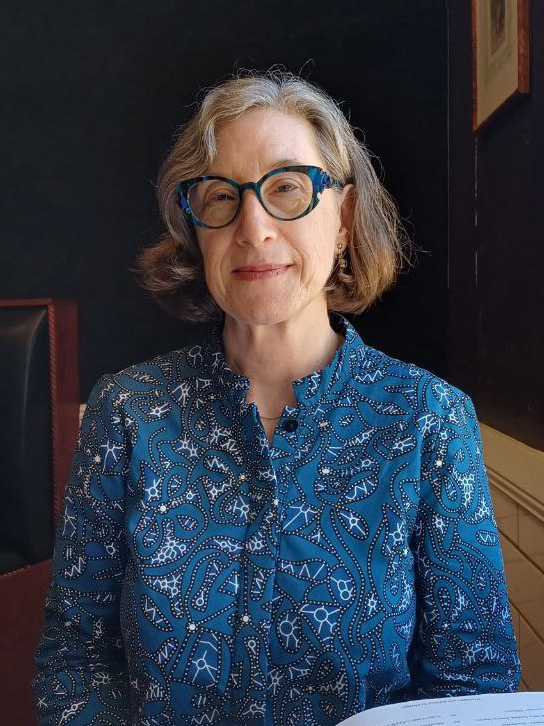
Hello! My name’s Stephanie.
Welcome to my home on the internet.
I’m an Australian writer and here you’ll find some of my works – poems, short fiction, writing advice and other scribblings – which I hope you will find of interest.
As a foretaste, below are some of the things I’ve found useful in the craft of writing, both for myself and the students I’ve taught.
Enjoy.
Reading for writing
Writing, like all art, doesn’t happen in a vacuum. It’s part of a conversation (sometimes a fight) with the world and with other writers and writing. That conversation happens partly through reading, and by attending readings, book launches, festivals, and conferences, etc. I was first a reader, then a writer (then many other things). My advice to beginning writers is to read – read everything you can get your hands on. Read voraciously.

Objects
Objects have always appeared in my writing. The make a tangible connection to world and culture, a solid bridge to ideas. My partner, Ian, sees my use of them as being arks of experience. As child I was intrigued by my mother’s jewellery box, for example. Small things seem precious to me, like words, but they also hold a repertoire of allusions and associations; family, love and loss – like the tiny gold locket that contains a lock of hair from an aunt I never knew – because she died of diphtheria as a child. My grandmother’s writing desk was a centrepiece of her household, as that was where the phone rested. Her connection with the wider world, beyond the small world of the country town where she lived. I have that desk now and I write on it every day.
Moments
Someone asked me not long ago about a recent poem of mine called ‘Promises’ which was a response to a prompt issued by the web publishing series Australian Poetry Collaboration to write about a moment connected with public memory (The Fulcrum Years, APC #40, Meuse 2025). ‘Promises’ is set in Canberra, late on a winter night, with Blondie on the radio and reports of Russian President Gorbachev’s efforts to end the cold war on the midnight news. The poem takes the form of a lament about lost romance, but it isn’t strictly biographical. The sense of lost romance that echoes through it is more about the lost romance of idealism – specifically the hope for nuclear non-proliferation and international peace.

Place and getting there
A lot of my writing is about place and loss and memory? I have probably always had a sense of ambivalence about place and belonging in Australia. Maybe that is partly because I was born in PNG. It also comes from a recognition that I’m a beneficiary of colonialism. My ancestors arrived in Australia from the UK towards the end of the colonial era, after many of these lands had been stolen from its traditional owners, but as a white woman I have still benefited from the theft. It took me a long time to settle. I grew up in Melbourne and moved interstate several times for work and study – Canberra, Perth and Tasmania – before arriving in Queensland. And… while I have a feeling of close attachment to certain places from childhood, none of those places are now in any sense mine. Eventually, and unexpectedly, I found a home on the Gold Coast with a tall, musically-inclined, ex-teacher and computer know-all.
A space of one’s own
Where you do your writing can be important – surrounding can influence the flavour of your work. I have a kind of studio with books and other things around me that I treasure. It’s my retreat from sensory bombardment: a place where I can let words and thoughts flow. Yes, it’s my ‘room of one’s own’ as Virginia Woolf defined it. I like writing in cafes, but noise can be distracting. We travel regularly and I always take several small notebooks. Hand writing seems to allow my thoughts to flow in a different way. It’s great for making notes, recording moments and capturing impressions. I never stay on the written page for long. Although writing by hand allows me to generate ideas and vignettes, the substance of the writing is done on screen and I like the clarity.
Resonance
All my writing is, in some sense, about the resonance between the material world – where we live and what cleaves to us – and the metaphysical – intuition, emotion and perception. I guess you could say some of my poems are political, but mainly they are responding to what I see happening around me. All forms of creative expression have the power to reveal, to show us the world – as it is and as we’d like it to be. Equally, art and literature can inspire us to have courage in facing brutality and oppression, and to find ways to make change.
Message for global citizens
After Bertolt Brecht
Cover your face. Don’t let yourself see. The sight is too much for you. Pull the shutter down over the window, then put the pot on the stove. Be careful to keep your eye on the pot. Turn down the flame so that it will not boil over. Lock the doors, back and front. Don’t let anyone in. Outside you can hear rumblings, people in the street marching, speaking their minds. Don’t think of going outside to join them. You are afraid it might be dangerous. It will be.
(Published in Sahara Rain, Liquid Amber Press, 2026, p. 32)
Sahara rain
Every writer has a theme they return to again and again. In recent years, like many other writers, I’ve been exploring the impact of global warming in my poems. My 2026 collection, Sahara Rain, was prompted by the experience in the Sahara during a massive storm, where the people who lived there had rarely, if ever, seen rain. It was a massive regional disaster. I was with a small group, camped south of Merzouga in Morocco, at the edge of the Sahara desert. We expected hot weather and dry sand stinging our faces, instead, skies were heavy and grey, the air was thick and still. Fierce storms came at midnight bringing drenching rain. In the morning, severe flooding threatened to keep us at the camp. Our minibus was bogged and the main road was impassable, but our driver hauled the minibus into action and we found a pathway through the Oasis – normally closed as a thoroughfare. It seemed like everyone in the region was following that one narrow red dirt road. My friend Jane Frank encouraged me to write about it, and I did. From there the collection developed along similar topics and themes: fire, rising temperatures, rising sea levels, and so on.


Slowing down
The world seems to be going through severe ructions at the moment. It’s troubling and frustrating to watch war and disruption unfold and to see the natural world under duress. We face an ever-flowing negative news stream with little means of discrimination, producing widespread social anxiety and distress. It strikes me that we need to slow down and look around us thoughtfully, on every front. Notice who and what is there, what’s needed for people to live well. Source reliable information and think critically about what we are told. Try to take a few steps in the shoes of others. That’s good advice for policy-makers, but it’s also good advice for any writer.
Final words
As I always say to my writing students, the one thing you need to do as a writer is to keep writing. Take every opportunity… in bed, in a café, in the park, on a train – anywhere, but keep writing!